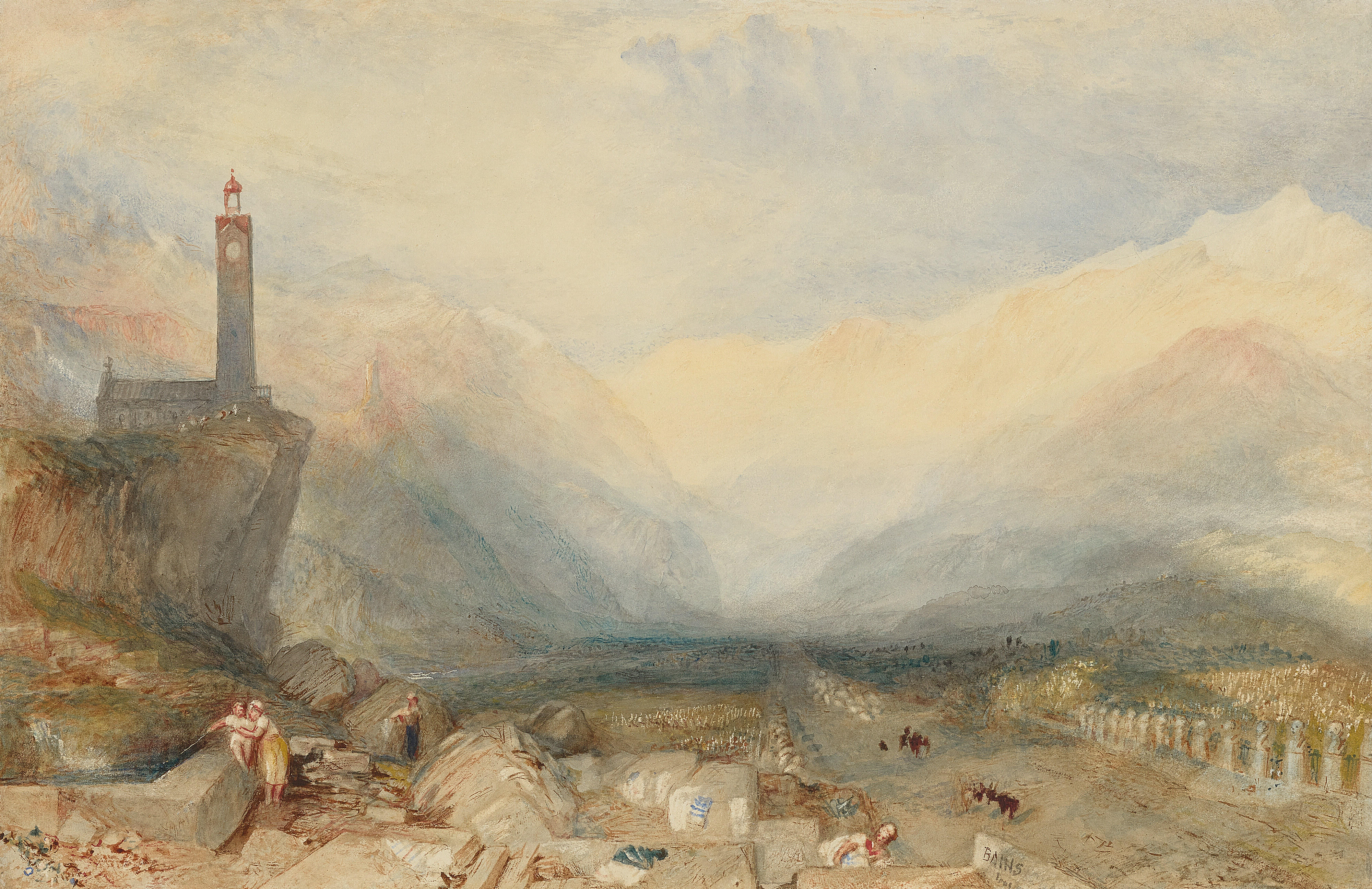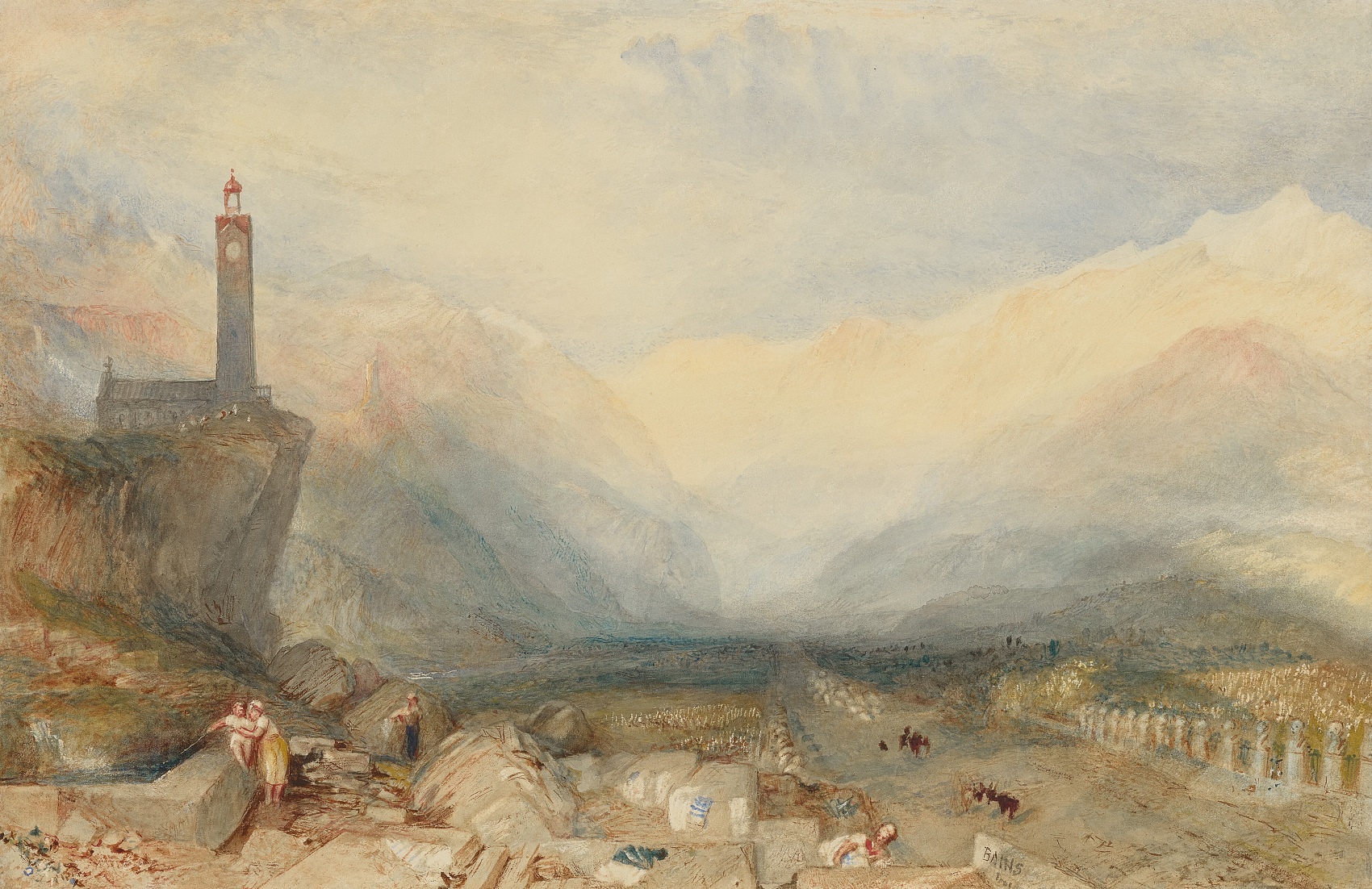
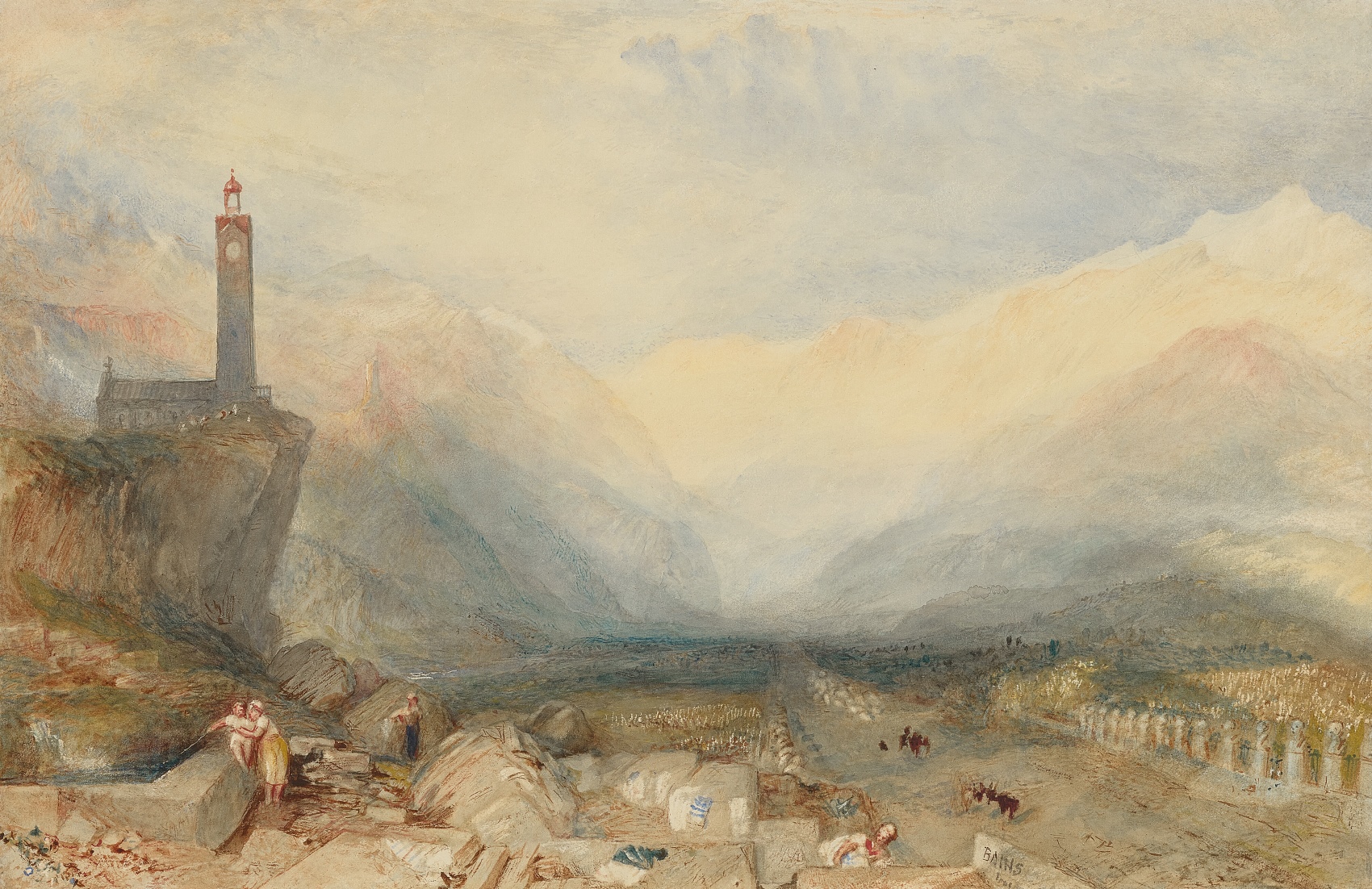
Joseph Mallord William Turner was arguably the most important and influential British artist of the first half of the nineteenth century. A painter, printmaker, and watercolorist, he was born on 23 April 1775, in Covent Garden, London as the son of a barber and wig-maker. Turner is renowned for his expressive use of colour, imaginative landscapes, and turbulent marine paintings.
Turner's artistic talent was evident from a young age. At just 14, he entered the Royal Academy schools, where he quickly became an outstanding student. His early works, characterised by their precise detail and topographical accuracy, gained significant recognition and helped him establish a successful career. His first oil painting exhibited at the Royal Academy in 1796, Fishermen at Sea, reveals strong influence of eighteenth-century landscapists including Claude Vernet, Philip James de Loutherbourg and Francis Swaine.
As Turner matured as an artist, his style evolved dramatically. He became fascinated with the effects of light and atmosphere, often pushing the boundaries of traditional landscape painting. The decades of the 1820s, 1830s and 1840s marked the creation of his most famous works, including The Fighting Temeraire (1839), and Rain, Steam and Speed – The Great Western Railway (1844), showcasing his innovative use of light and colour to convey motion and atmosphere, also evoking the seismic changes initiated by the industrial revolution.
Despite his success, Turner's personal life was marked by solitude. He never married and became increasingly eccentric and reclusive in his later years. On his death in 1851, his body was laid to rest in St Paul's Cathedral, a testament to his significant contribution to the art world, recognised in his own lifetime and in the years that followed.